WHOIS Information: The Complete Guide to Domain Ownership Lookups Published: 05 May, 2026
Introduction
Every domain name registered on the internet leaves a trail of public information. That trail is called WHOIS data, and accessing it through a WHOIS information tool is one of the most fundamental skills in web research, cybersecurity, domain investing, and online due diligence. Whether you are investigating who owns a competitor's website, verifying the legitimacy of an online store, or researching a domain before purchasing it, WHOIS information gives you a direct window into the ownership record of any domain name on the internet.
This guide covers everything you need to know about WHOIS: its history, how it works, what information it reveals, how to interpret the results, and the privacy considerations that surround it.
What Is WHOIS?
WHOIS (pronounced "who is") is a query-and-response protocol used to retrieve information stored in a database about a registered domain name. The system was created in the early 1980s as a directory service for the early internet. When the internet was small and academic, it made sense for all network resource owners to be publicly listed.
Today, WHOIS records are maintained by domain registrars and central registry authorities. Each time a domain is registered, the registrant provides contact information that is stored in the WHOIS database. Anyone with access to the internet can query this database to find out details about who owns a given domain, when it was registered, and when it expires.
What Information Does a WHOIS Lookup Reveal?
A standard WHOIS record contains several categories of information:
Registrant Information
This section reveals who owns the domain:
- Name: The individual's or organization's name
- Organization: The company or entity behind the registration
- Address: Physical mailing address of the registrant
- City, State, Country: Geographic location
- Email: Contact email address
- Phone: Contact phone number
Note: With the introduction of WHOIS privacy protection services, many of these fields may be replaced by proxy contact details.
Administrative Contact
The person responsible for managing the domain on behalf of the registrant. This may or may not be the same as the registrant.
Technical Contact
The person or organization responsible for the technical aspects of the domain — usually the web host or IT administrator.
Registrar Information
- Registrar Name: The company through which the domain was registered (e.g., GoDaddy, Namecheap, Google Domains)
- Registrar IANA ID: A unique identifier assigned by ICANN
- Registrar WHOIS Server: The specific server where detailed WHOIS data for this domain is stored
- Registrar URL: The website of the registrar
Domain Status Codes
WHOIS records include EPP (Extensible Provisioning Protocol) status codes that indicate the current state of the domain. Common codes include:
- clientTransferProhibited: The domain cannot be transferred to another registrar without the registrant's authorization
- clientUpdateProhibited: Changes to the domain's information are locked
- clientDeleteProhibited: The domain cannot be deleted
- serverHold: The domain has been placed on hold by the registry (often due to policy violations)
- pendingDelete: The domain is scheduled for deletion and will soon be released for re-registration
Important Dates
- Creation Date: When the domain was first registered
- Updated Date: When the domain's WHOIS record was last modified
- Expiration Date: When the domain registration will expire (after which the domain may be available for others to register)
Name Servers
These are the DNS servers responsible for routing traffic to the domain. Name server information tells you where the website is hosted and can be helpful in identifying the hosting provider.
How to Read a WHOIS Record
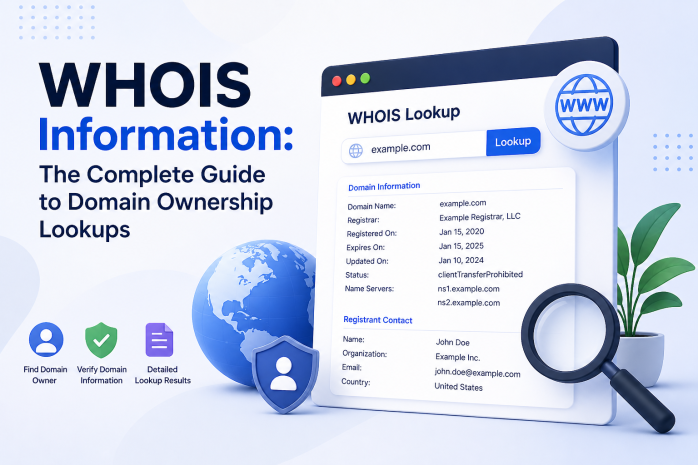
A raw WHOIS record can look intimidating at first glance, but once you understand its structure, it becomes easy to navigate. Here is an example of what key sections look like:
Domain Registration Information
- Domain Name: EXAMPLEBRAND.COM
- Registry Domain ID: 123456789_DOMAIN_COM-VRSN
- Registrar WHOIS Server: whois.registrarname.com
- Registrar URL: http://www.registrarname.com
- Updated Date: 2023-09-15T00:00:00Z
- Creation Date: 2015-04-01T12:00:00Z
- Expiry Date: 2025-04-01T12:00:00Z
- Registrar: RegistrarName, Inc.
- Registrar IANA ID: 456
- Domain Status: clientTransferProhibited
Registrant Contact
- Name: John Doe
- Organization: Example Brand LLC
- Street: 123 Main Street
- City: New York
- State/Province: NY
- Postal Code: 10001
- Country: US
- Phone: +1.2125551234
- Email: admin@examplebrand.com
Name Servers
- NS1.HOSTINGPROVIDER.COM
- NS2.HOSTINGPROVIDER.COM
Why Would You Need to Perform a WHOIS Lookup?
There are many legitimate and practical reasons to use a WHOIS information tool:
1. Verifying the Legitimacy of a Website
Before making a purchase or sharing personal information on an unfamiliar website, a WHOIS lookup can help you verify whether the site is real, how long it has been registered, and who is behind it. A domain registered just a few days ago with hidden contact details is a red flag for potential fraud.
2. Contacting the Owner of a Domain
If you want to purchase a domain that is already registered, or if you need to reach the webmaster of a site for business or legal reasons, WHOIS provides the contact details you need.
3. Investigating Copyright or Trademark Infringement
If you discover a website that appears to be infringing on your intellectual property, a WHOIS lookup can help you identify the responsible party as part of a legal investigation.
4. Domain Investment and Research
Domain investors (often called "domainers") use WHOIS extensively to research domains before buying or selling them. Knowing the creation date, expiration date, and ownership history is critical for evaluating a domain's value.
5. Cybersecurity and Threat Analysis
Security professionals and researchers use WHOIS data to investigate malicious domains, phishing sites, and command-and-control servers used in cyberattacks. Correlating WHOIS data with threat intelligence can help trace the origin of attacks.
6. Competitive Intelligence
Businesses use WHOIS to research competitor domains — when they were registered, through which registrar, and when they expire. This information can inform competitive strategy.
7. Monitoring Domain Expirations
If you are interested in acquiring a specific domain when it becomes available, monitoring its WHOIS expiration date lets you time your registration attempt.
WHOIS Privacy Protection: What It Is and How It Works
In response to growing concerns about privacy, most domain registrars now offer WHOIS Privacy Protection (also called Domain Privacy or ID Shield). When activated, this service replaces the registrant's personal information in the public WHOIS record with the registrar's proxy contact information.
For example, instead of showing:
- Name: John Doe
- Address: 123 Main Street, New York, NY
- Email: john@example.com
The WHOIS record shows:
- Name: Privacy Protected
- Address: c/o RegistrarProxy, 456 Proxy Lane
- Email: proxy-12345@privacyprotect.registrar.com
Who Benefits from WHOIS Privacy?
- Individual bloggers and content creators who do not want their personal address publicly listed
- Small business owners who want to protect personal information while maintaining a professional web presence
- Anyone concerned about spam, unsolicited calls, or targeted marketing based on WHOIS data scraping
Does WHOIS Privacy Affect SEO?
No. Google and other search engines have confirmed that WHOIS privacy protection has no negative impact on search engine rankings. Your website's visibility in search results is entirely unaffected by whether you choose to use a privacy proxy.
GDPR and Its Impact on WHOIS Data
The introduction of the General Data Protection Regulation (GDPR) in the European Union in May 2018 had a significant impact on the availability of WHOIS information. GDPR requires that personal data about EU citizens be protected and not freely disclosed to any member of the public.
As a result:
- Many domain registrars now redact personal information from WHOIS records for registrants based in the EU or registrations processed through GDPR-compliant registrars
- Legitimate purposes (law enforcement, intellectual property protection, cybersecurity research) may still access full WHOIS data through a formalized request process
- ICANN (the Internet Corporation for Assigned Names and Numbers) has been working on a new framework called RDAP (Registration Data Access Protocol) to balance privacy with the legitimate need for registration transparency
RDAP: The Future of WHOIS
RDAP is a modern replacement protocol for WHOIS that offers:
- More structured and standardized data formats (JSON-based)
- Better access controls and tiered access for different user types
- Improved internationalization support
- Clearer legal compliance with modern data protection regulations
RDAP is not yet universally adopted, but it is the direction the industry is moving toward.
Understanding Domain History Through WHOIS
Beyond current ownership information, WHOIS tools that track historical records can reveal a domain's full registration timeline. This historical WHOIS data shows:
- Every previous owner of the domain
- Changes in name servers over time
- Periods when the domain was expired or dropped
- Changes in registrar
This historical view is extremely valuable for:
- Domain buyers: Understanding a domain's past helps you identify potential issues, such as a history of spam or blacklisting.
- Journalists and investigators: Tracking domain ownership changes can reveal important information about the people or organizations behind a website.
- Brand protection specialists: Historical WHOIS data can support legal cases involving domain disputes.
Interpreting Suspicious WHOIS Patterns
Knowing what to look for in a WHOIS record can help you identify potentially fraudulent or problematic domains:
Very Recent Registration Date
A domain created within the last few weeks or months — especially one posing as an established company — is a major warning sign. Phishing sites and scam stores are often built on freshly registered domains.
Mismatched Information
If a website claims to be based in one country but the WHOIS record shows registration in a completely different country with no logical connection to the brand, this inconsistency warrants further investigation.
Expiring Soon
A domain that expires in a few days might indicate the owner is abandoning it, which could signal a failing business or a temporary fraudulent operation.
Hidden Ownership with No Other Trust Signals
While WHOIS privacy is legitimate and common, a website that hides all ownership information AND has no physical address, no verifiable phone number, and no social media presence should be approached with extreme caution.
WHOIS vs. Other Investigation Tools
WHOIS is powerful, but it is most effective when combined with other tools:
| Tool | What It Adds |
|---|---|
| Reverse IP Lookup | Reveals other websites hosted on the same server |
| DNS Lookup | Shows the full DNS record, including mail servers and SPF records |
| Blocklist Lookup | Checks if the domain is flagged by spam or malware databases |
| Domain Location | Shows the physical location of the hosting server |
| SSL Certificate Check | Verifies the domain's HTTPS security certificate |
Using WHOIS together with these complementary tools gives you a complete picture of any domain's identity, ownership, infrastructure, and reputation.
Conclusion
WHOIS information tools are an essential resource for anyone navigating the internet with purpose and care. From verifying the legitimacy of online businesses to conducting deep cybersecurity investigations, WHOIS data provides a foundational layer of transparency in the domain name system. Understanding how to read and interpret WHOIS records — and knowing their limitations in the post-GDPR era — empowers you to make better-informed decisions online.
Whether you are a developer, entrepreneur, journalist, security researcher, or simply a savvy internet user, learning to use WHOIS effectively is a skill that pays dividends every time you encounter an unfamiliar domain on the web.